about
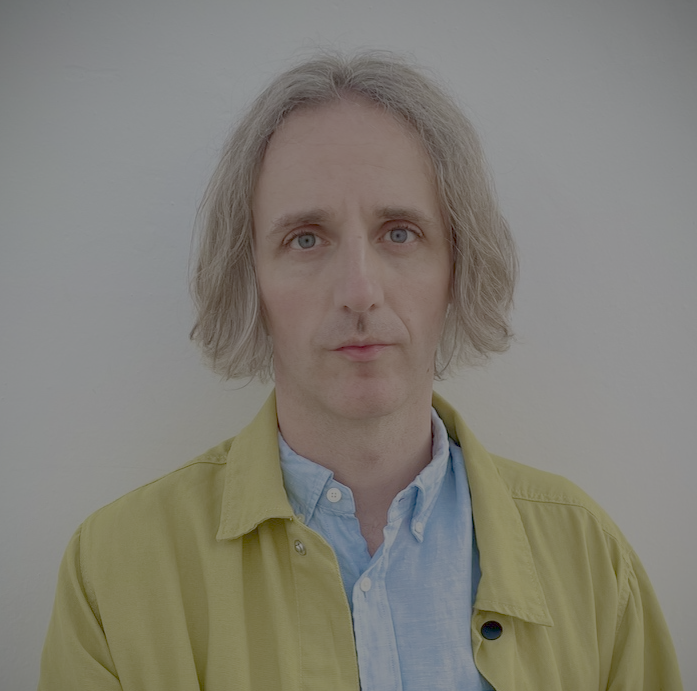
I am Senior Lecturer in Phonetics at Lancaster University, where I co-direct the Phonetics Laboratory and lead the Speech Physics Group. I am also affiliated with the Data Science and AI Institute.
I was awarded my PhD in 2014 from the University of Sheffield. I currently serve as associate editor at Journal of Phonetics and was awarded the 2026 ISCA Mid-Career Excellence Award in recognition of advancing understanding of speech dynamics through integration of articulatory imaging, computational modelling, and dynamical systems theory.
My research aims to discover the physical and cognitive principles behind spoken language. Speaking depends on precisely coordinated movements of the tongue, lips, jaw and larynx that shape moving air into audible language. I measure these movements using MRI, ultrasound, and electromagnetic articulography, and build mathematical models of how movements are planned and controlled. This work draws heavily on dynamical systems theory and spans linguistics, speech motor control, and the physics of living systems. My research is funded by UKRI (2019-25) and The Royal Society (2025-27) and currently focuses on the following areas:
-
Dynamical principles of speech movements. Speech movements look incredibly complex, with rapid coordination between many different muscles and articulators. What principles describe these movements, and how much of that complexity is a property of the body’s own mechanics rather than cognitive control? I pursue these questions by analysing vocal tract dynamics in tandem with data-driven equation discovery and computational modelling. A major current strand, with Patrycja Strycharczuk, looks at variation in articulatory strategies and attempts to separate the contributions of anatomy and learned behaviour to speech.
-
Time-varying dynamics of speech. As in many living systems, the dynamics of speech drift over time and interact with rhythms in the brain, body and environment. With physicist Aneta Stefanovska, I am adapting methods developed for time-varying systems, such as the cardiovascular system, to study how the subsystems of speech are coupled and how that coupling changes over time.
-
Interpretable acoustic-articulatory inversion. Can we predict how the tongue and lips are moving from audio recordings of speech? With Anton Ragni and Vishal Kumar, I am developing physics-informed machine learning models that link speech acoustics to vocal tract movements and their underlying control dynamics.
Upcoming talks & events
- Plenary talk at HISPhonCog 2026, South Korea, May 2026
- Seminar talk at IPS Munich, Germany, June 2026
- Organising a satellite workshop on Articulatory control and the nature of phonological organization at LabPhon20, Canada, June 2026
- Plenary talk & workshop at Methods For Studying The Social Meanings of Fine Phonetic Variation, Switzerland, October 2026
- Ultrasound workshop at LiRI, Switzerland, November 2026
- Plenary talk at Ultrafest XII, France, November 2026